

When the rules no longer protect .. you must protect yourself
World leaders arriving in Davos on January 19, 2026 for the annual World Economic Forum would have had no idea then that they would be leaving the little Swiss city four days later with a different world view. But, on day two of the 5-day event, Canada’s recently elected Prime Minister, Mark Carney made a speech that arrested the attention of the 2,000 and more present and millions more around the world.
The presentation of the former Governor of the Bank of Canada and subsequently Governor of the Bank of England, later described as “a defining moment” at the Davos event, laid bare the challenges and harsh realities of global trade now faced by peoples and countries around planet Earth. The silence of his audience was deafening as participants contemplated the immediate future of global trade and economics.
“Let me be direct, we are in the midst of a rupture, not a transition. Over the past two decades, a series of crises in finance, health, energy and geopolitics have laid bare the risks of extreme global integration. But more recently, great powers have begun using economic integration as weapons; tariffs as leverage; financial infrastructure as coercion; supply chains as vulnerabilities to be exploited. You cannot live within the lie of ‘mutual benefit through integration’ when integration becomes the source of your subordination.”
“The multilateral institutions on which the Middle Powers have relied … the WTO, the UN … the very architecture of collective problem solving are under threat. And, as a result, many countries are drawing the same conclusions; that they must develop greater strategic economy …. in energy, food, critical minerals, in finance and supply chains. And this impulse is understandable.
“A country that can’t feed itself; fuel itself; or, defend itself has few options. When the rules no longer protect you, you must protect yourself.” [ Mark Carney, January 19, 2026]
Arguing the need to build and develop new trade relationships, Carney said the rules-based international system which for decades had been the foundation of global trade is breaking down. While, increasingly, the largest, most powerful countries (the so-called ‘superpowers’) are using finance, trade and supply chains in coercive strategies that ultimately stifle growth and impede development, thereby undermining the process of economic development in the so-called ‘middle powers’.
So powerful and enlightening was Mark Carney’s presentation in Davos, he was immediately invited by the Prime Minister of Australia, Anthony Albanese to visit Australia. The invitation was not to discuss the $6 billion Arctic Over-the- horizon radar technology that Canada purchased from Australia in 2025. Rather, Albanese wanted Carney to address the Australian Parliament, in person. Inspired by Carney’s analytical summary of current global economics and the path to sustained development for ‘middle power’ nations, Australia’s Prime Minister felt it necessary for Australians and particularly Australian lawmakers to hear for themselves the analysis and global solutions that Carney shared in Davos.
World of Opportunities
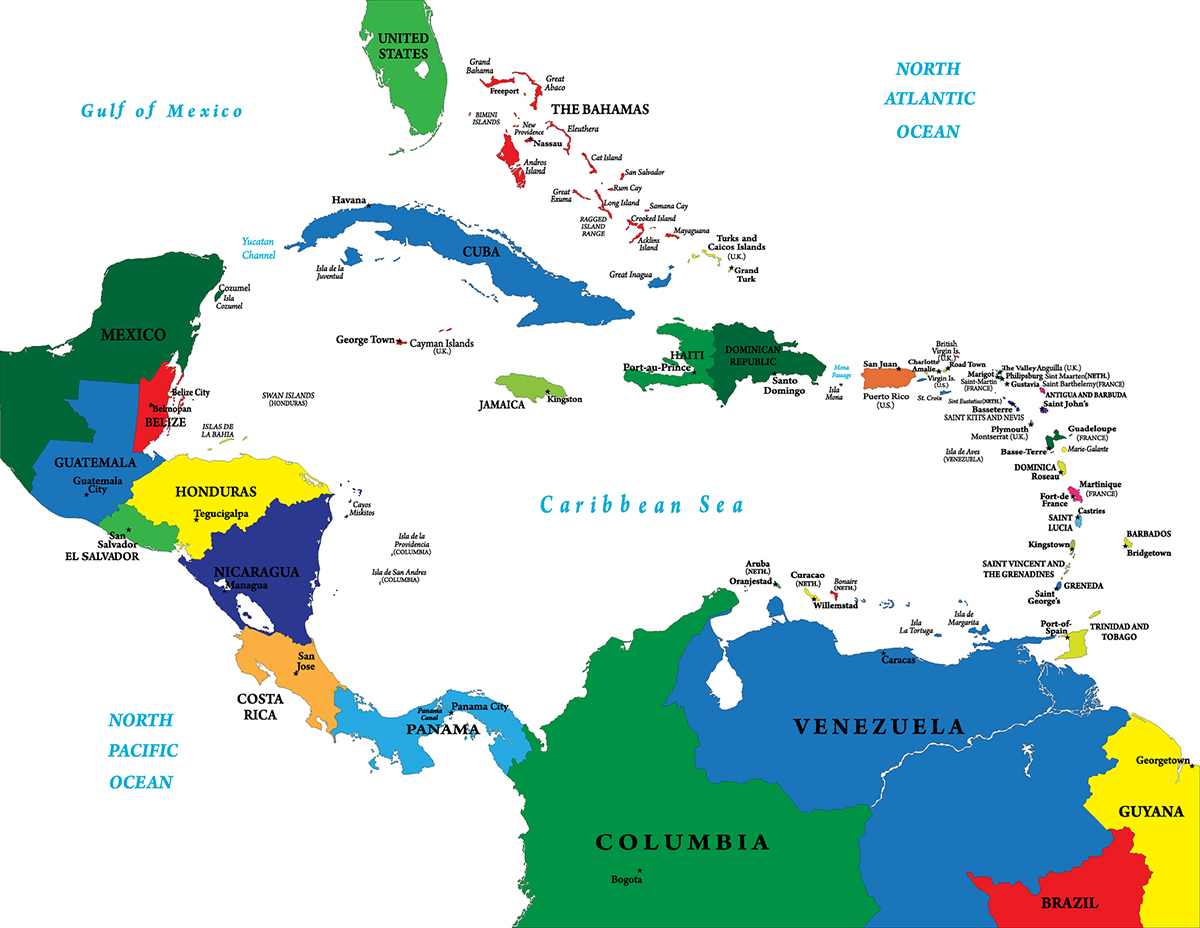
Countries of the Caribbean, mostly island states, do not have the global clout of any ‘middle power’ country. Individually and collectively, they are vulnerable in a world where, as Mark Carney argues: “… great powers have begun using economic integration as weapons; tariffs as leverage; financial infrastructure as coercion; supply chains as vulnerabilities to be exploited.” The decision by a newly elected USA President to slap crippling trade tariffs on the two ‘middle power’ countries with which the USA had shared a cordial relationship and common borders for centuries was, at the very least, unsettling. And clearly, the rules and customs governing global trade no longer protected the countries of the Caribbean.
“When the rules no longer protect you, you must protect yourself.”
Given the global realities of the present era, Caribbean governments must move immediately and briskly to protect their national economies and the process of development that produced the gains so far made by their peoples. In this regard, initiatives to establish trade alliances with middle power countries … of which there are about 60+ … must be treated with the utmost urgency.
We have the goods
The Caribbean region has a fascinating history. Spread across more than 30 sovereign states and associated territories is a vast variety of skills, talent and resources; and, unique cultures that evolved over more than 500 years. All together, the peoples of the Caribbean have the capacity … not to mention the tenacity … to drive the kind of economic development that was impossible to achieve in post-colonial relationships in which price, terms and quantities were dictated by the buyer.
No longer restricted by uneven trade deals and crippling tariffs, the peoples of the Caribbean have the ideas, skills and energy necessary to accelerate their development. []
 Mike Jarrett