
St. Vincent and the Grenadines unveils
Modern Port Operations Company
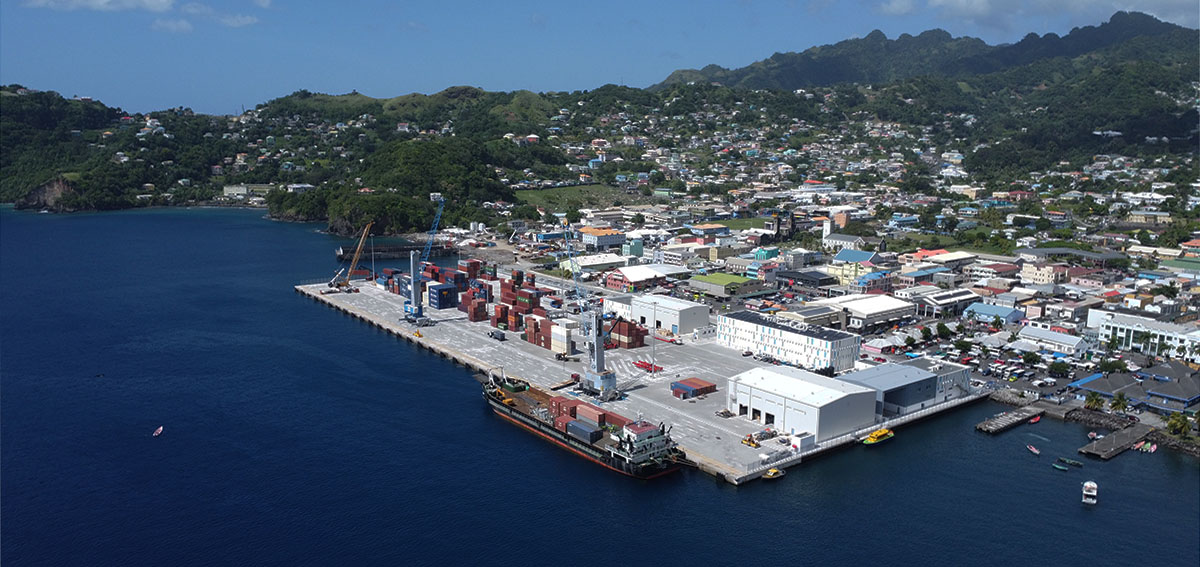
The government and people of St. Vincent and the Grenadines formally unveiled their new seaport facility on October 25, 2025. The Caribbean’s newest cargo port, under construction and development since the project was officially launched (on July 1, 2022), docked its first ship, the MV FOUMA, flying the Cyprus flag, on October 26, 2025.
Futuristic in many ways and designed to meet the challenges of an intense and worsening global Climate Crisis, the facility, regulated by the St. Vincent and the Grenadines Port Authority, is being operated under the nomenclature Modern Port Operations Company (i.e., the MPOC).

Profile and Statement of Intent
St. Vincent and the Grenadines Port Authority
[ap_dropcaps style=”ap-normal”]T[/ap_dropcaps]he MPOC was established in 2025 following the completion of construction of the port facility. This new development marks the beginning of a major transformation in how we manage trade, logistics and maritime services in St. Vincent and the Grenadines. For decades, port operations in St. Vincent and the Grenadines relied on manual systems and basic infrastructure — approaches that served well but were no longer suited to the growing demands of international trade and cruise tourism. Today, we enter a new era defined by technology, efficiency and global competitiveness.
As part of this transition, the St. Vincent and the Grenadines Port Authority, which has long overseen both regulation and operations, is shifting fully into the role of independent regulator, responsible for oversight, policy, and safety standards. The MPOC will assume responsibility for daily terminal operations, service delivery, and customer experience across the port system. This transition is ongoing and will be working closely with all stakeholders to ensure a smooth, coordinated process that maintains safety, continuity, and service reliability throughout. Our scope is broad but our commitment is focused: To provide seamless, reliable, and innovative solutions that fuel trade, tourism, and national growth.
As a dedicated terminal operating company, the MPOC manages:
- Cargo terminal operations
- Cruise terminal services
- Ferry terminal operations
- Commercial parking facilities
- Management of local smaller ports across the country
The Beginning
The MPOC was created to operate the newly built, purpose-designed port facility in Kingstown — a major investment intended to modernise maritime logistics, strengthen inter-island connectivity and enhance global trade competitiveness. With this commissioning, the Port Authority’s role evolved to that of independent regulator, responsible for setting and enforcing policy, safety, and tariff standards while the MPOC drives operational excellence and customer service.

Why a new structure
The shift to a regulator-operator model follows international best practices and achieves:
- Clear accountability: transparent oversight and defined roles
- Operational agility: faster decision-making and service innovation
- Investment focus: capacity to plan and fund new technologies and infrastructure
- Improved partnerships: a single operational interface for shipping lines, cruise agents, and stakeholders
Governance & Transparency
Integrity and accountability:
- Independent Regulator Oversight
- SVGMPOC Board Leadership
- Corporate Policies: Anti-corruption, fair procurement and stakeholder inclusion
- Transparent Reporting on performance and sustainability

Operations
Operating Footprint
- Main Port: Deep-water berths, modern cargo yard, dedicated cruise and cargo facilities
- Network local Ports: Standardized safety, scheduling, and operational protocols.
- Landside Integration: Road access optimization, staging for freight processing.
What We Do
- Marine & Berth Management
- Cargo Handling Services
- Cruise Terminal Management
- Ferry & Inter-Island Services
- Commercial Parking Operations
- Network Port Management
TECHNOLOGY & INNOVATION
MPOC is building a digital-first port environment, leveraging modern technology to improve efficiency, transparency, and collaboration across the logistics chain. Systems include:
- Terminal Operating System (TOS): Real-time visibility of vessel, yard, and gate operations.
- Port Community System (PCS): A unified digital platform connecting shipping agents, customs, brokers, and logistics partners.
- Virtual Vessel Scheduling: Integrated berth and resource planning.
- Data & Analytics Dashboards: Real-time KPIs for productivity, dwell time, and customer satisfaction.
- Cyber Resilience Measures: Enhanced protection for digital infrastructure and data assets.
SAFETY, SECURITY & QUALITY
- Full compliance with the ISPS Code across cargo and cruise terminals.
- A robust HSE Management System with continuous training.
- Emergency Preparedness programmes for hurricanes, fire, medical, and mass-casualty scenarios.
- A pathway toward ISO-aligned quality management standards.
PEOPLE & CULTURE
Our people are our greatest asset. All employees of the St. Vincent and the Grenadines Port Authority who are part of the transition will be transferred to MPOC with their full accrued rights, benefits, and entitlements intact — including seniority, pension, and leave benefits. Employees also benefitted from new training, upskilling and digital literacy programmes to equip them for the technology-driven systems being introduced.
We are building a Right-First-Time culture focused on service excellence, collaboration, and accountability — ensuring that every team member plays an active role in delivering results and innovation.

SUSTAINABILITY & COMMUNITY
MPOC is committed to responsible, inclusive growth through:
- Operational Efficiency: Reduced idle time, optimized energy use, and waste segregation.
- Environmental Stewardship: Spill prevention, water quality monitoring, and harbour protection.
- Community Impact: Skills training, youth development, local vendor participation, and cultural engagement, internship programmes
- Tourism Readiness: Accessibility upgrades, signage, and visitor experience enhancements.
ECONOMIC VALUE
The modernization of port operations represents a key pillar of national development. By improving reliability, cargo handling capacity, and cruise services, the new structure will:
- Lower the cost of trade and logistics
- Increase cruise passenger spending
- Create new employment and business opportunities
- Strengthen national economic resilience
_

______________
Modern Port Operations Company
— Facts & Answers —
| Established: | 2025 |
| Role: | National Terminal Operator |
| Regulator: | St. Vincent & the Grenadines Port Authority |
| Network: | 1 Main Port + Cruise Terminal + 5 Smaller Ports |
| Core Services: | Cargo • Cruise • Ferry • Commercial Parking |
| Focus: | Innovation • Service • Sustainability |
_______________
- What is the current status of the transition from the Port Authority to MPOC?
The transition is actively underway and being managed collaboratively between the Port Authority, Government, and MPOC to ensure continuity, safety, and staff integration.
- Why was this new structure created?
It separates regulatory and operational roles for clearer accountability, faster decision making, and greater innovation, aligning with international standards.
- What new technologies are being introduced?
A Terminal Operating System (TOS), Port Community System (PCS), Maritime Single Window and Virtual Vessel Scheduling are being implemented to improve efficiency, transparency, and coordination across all port users.
- Why was automated cargo handling equipment not purchased for the new port?
Full automation is not currently cost-effective for the country’s cargo volumes. Instead, MPOC has invested in pertinent modern equipment that can be upgraded for automation as trade volumes increase. This ensures operational flexibility and responsible investment.
- What happens to the existing port employees under this transition?
All employees are being transferred to MPOC with their full accrued rights, benefits, and entitlements intact — including pension, seniority and leave benefits. Continuous training and capacity building are part of the transition plan.
- How will the cruise industry benefit from the new arrangements?
The cruise terminal now operates under a dedicated service model focused on passenger experience and community benefit — improving facilities, flow, and partnerships with tour and transport providers.
- What is being done to ensure sustainability?
MPOC is embedding sustainable practices in operations, energy management, and community engagement — supporting national climate and environmental goals.
- How will this transformation benefit the national economy of St. Vincent and the Grenadines?
The modernized port will enhance logistics efficiency, support tourism growth, and create long-term economic and employment benefits for St. Vincent and the Grenadines. []

#caribbeanports #seaportdevelopment #caribbeanshipping
FIRST PUBLISHED: PORTSIDE CARIBBEAN, December 1, 2025